Use Changing light and conditions to add interest

January Morning at Winn Barn - Copyright Gary Hamburgh 2009 - All Rights Reserved

I am always looking for a different perspective of photographing familiar areas and subjects. One of my favorite barns is located on Winn Road near Weston, Oregon. This is about one hour south of the Palouse. I visit this barn at all times of the year and at various times of the day. I am rarely disappointed in the images I capture at this spot.

On a January morning, I arrived at this barn about 30 minutes before sunrise and prepared to capture the barn at sunrise. To my delight as the sun was rising a fog filled the area where the barn was situated. I took my first image which is shown at the top of this post. As I waited the light was changing as can be seen in the image below. I also liked the black and white version of this image so included it as well.

January Morning at Winn Barn 2 - Copyright Gary Hamburgh 2009 - All Rights Reserved

January Morning at Winn Barn 2 b&w - Copyright Gary Hamburgh 2009 - All Rights Reserved

Finally as the sun got higher in the sky the fog lifted and the barn and its clouds were very visible as seen in the final image.  As you can see, by remaining in place I was able to capture several different images with a variety of moods of the same composition.

January Morning at Winn Barn 2009 - Copyright Gary Hamburgh 2009 - All Rights Reserved

I would suggest trying this procedure as you may be amazed at the image that is available with just a change of light or conditions.

Palouse Falls – A Challenging but Rewarding Photo Experience

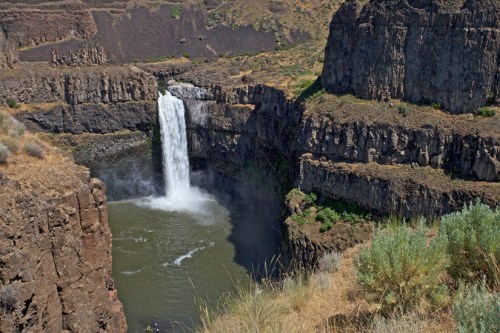
GHamburgh_MG_9782-Afternoon-at-Palouse-Falls-1

Afternoon at Palouse Falls 1 - Copyright Gary Hamburgh 2009 - All Righs Reserved

One of my favorite places to visit in eastern Washington is Palouse Falls State Park. The scenery leading to the park is actually quite mundane with a few cattle grazing on land that doesn’t appear to have much grass. When you make the final descent into the park the vista that opens up in front of you is quite amazing with the deep canyon walls and of course the falls.

As much as I like to visit this area, it is one of the most difficult spots to photograph. You need to be there when the sun is high overhead so the the falls will be in light. At this time of day the light is very harsh and the canyon walls are still in shadows.

I have tried to create an HDR image in Photomatix to capture this high contrast scene but for me it never is quite right mainly because of the breezes that constantly move the mist around the falls and the slight movement in the grasses.

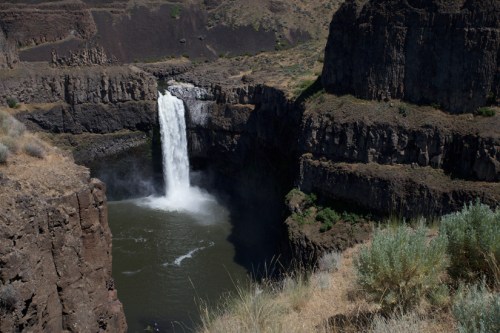
The image at the top of this post was processed with a few adjustments that I will describe to you. I feel it gives the best representation of the view that I see when I visit this area. Below is the image that I captured in camera as I exposed for the waterfall to retain the highlights.

GHamburgh_MG_9782-Afternoon-at-Palouse-Falls

Afternoon at Palouse Falls - Copyright Gary Hamburgh 2009 - All Rights Reserved

The processing I used was very minimal but it did open up the necessary areas. I opened up the shadows a bit in Aperture to start with. Next I went to Nik Color Efex Pro 3.0 and used the tonal contrast filter. This gave the image a little bit more pop and created for me the image that I had seen. I have shown the finished image again below so that you can see the comparison of before and after.

GHamburgh_MG_9782-Afternoon-at-Palouse-Falls-1

Afternoon at Palouse Falls 1 - Copyright Gary Hamburgh 2009 - All Rights Reserved

Visiting Palouse Falls is a must side trip if you are in the Palouse region. Just remember to go when the sun is high and plan your post processing as you capture your images.

Experience Creativity

GHamburgh_MG_2218-Farm-in-the-Palouse

Farm in the Palouse - Copyright Gary Hamburgh 2009 - All Rights Reserved

Creativity for most of us at times seems to be elusive. It seems we have the tendency in our work to go into a deep fog. It is difficult to drag ourselves out because we feel we have to do something totally awesome to get our creativity back.

My mentor Scott Bourne has posted an article on Photofocus that speaks to this issue of creativity. I find it very insightful as it offers some perspectives I hadn’t considered. Give it a read and see if the points hit home with you.

The final thought expresses being creative is “being you”.

The Skies of the Palouse


GHamburgh_MG_2196-Colors-Enhance-the-Sky

Colors Enhance the Sky - Copyright Gary Hamburgh 2009 - All Rights Reserved

As I travel the Palouse I am always amazed at the beauty of the land. Another element that adds to the landscape is the awesome sky. In the image at the top of this post, the brilliant colors of a rainbow enhance this sky.

It seems that many times in the late afternoon and early evening dramatic skies present themselves. I like to use a polarizer as I shoot in these situations because it really brings out the colors in the skies.

Remember using the dramatic colors and contrast you see in the clouds and skies can really add to the beauty of the Palouse landscape.


Keep your horizons level


bubble-level-2

Bubble level in hot-shoe

bubble-level1

Bubble level


Whether you are shooting landscapes in the Palouse, sports in an arena or portraits in a studio, it is important to keep your images straight. When shooting on a tripod, I always use a bubble level as seen in the images at the top of this post. Without the level, I have a tendency to shoot with about a 3 degree tilt up to the right side. I have found by using the hot – shoe level my images are always straight.

It always amazes me when I am shooting how many people come up and ask about the level. Most have never thought of it and they always say “what a great idea” because they also have trouble keeping their horizons level.

If you don’t already have one of these great little tools, I would suggest buy one immediately as it can save you the time of cropping your image to get it straight. Also as you crop sometimes you may lose some critical information. As always getting things right in the camera is the best rule and the bubble level helps you accomplish that.


Raptors in the Palouse


GHamburgh_MG_4963-Osprey

Osprey - Copyright Gary Hamburgh 2009 - All Rights Reserved

In the last couple of weeks I have observed several varieties of raptors in my travels in the Palouse. I saw the osprey at the top of this post while photographing a fly fishing trip on the Grande Ronde River in eastern Washington.  The bald eagle in the picture below was observed near Asotin, WA. Bald eagles are not as plentiful in the Palouse as they are in western Washington so I was happy to spot this one.

gHamburgh_MG_5428-Bald-Eagle

Bald Eagle - Copyright Gary Hamburgh 2009 - All Rights Reserved

In the final images is a juvenile red tailed hawk that I saw just to the east of Cheney, WA. If you are interested in photographing raptors there are several varieties that can be seen throughout the Palouse. I keep my eyes open and my camera on the seat next to me so that I am ready if I observe one of these graceful, powerful birds.
GHamburgh_MG_7474-Red-tailed-hawk-1

Red Tailed Hawk 1 - Copyright Gary Hamburgh 2009 - All Rights Reserved

GHamburgh_MG_7485-Red-tailed-hawk-2

Red Tailed Hawk 2 - Copyright Gary Hamburgh 2009 - All Rights Reserved


How to Grow your Photography Business

GHamburgh_MG_6801-Morning-Tug-at-Central-Ferry-2009-10-27

Morning Tug at Central Ferry - Copyright Gary Hamburgh 2009 - All Rights Reserved

I was definitely impressed with an article published by my mentor Scott Bourne on his Photofocus website. It deals with how to grow your photo business. As I have been expanding my name and face in the Palouse over the last year, these points really hit home.

Take the time to read the article and inject these ideas into your current business plan. I believe you will realize added success by following his advice.

A Day Trip to Whitman Mission


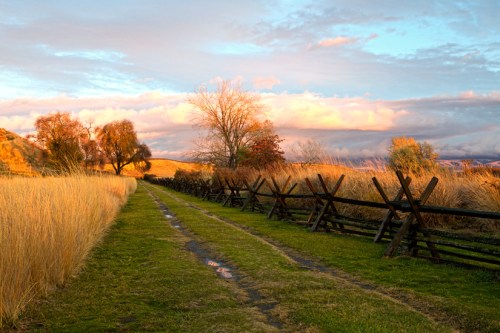
GHamburgh_MG_6760-Evening-at-Whitman-Mission

Evening at Whitman Mission - Copyright Gary Hamburgh 2009 - All Rights Reserved

When visiting the Palouse region of eastern Washington, a day trip to Whitman Mission National Park near Walla Walla is a great way to experience some of the important history and beauty in this area. It is about a 2 hour drive from Colfax and provides you with great views of the Palouse all the way to Walla Walla.

Interest and beauty abound at Whitman Mission as well. The picture at the top of this post was taken on an actual part of the Oregon Trail. Many species of birds and mammals can be found  at Whitman Mission. Go to the website and see exactly what can be found on a visit to this national park.

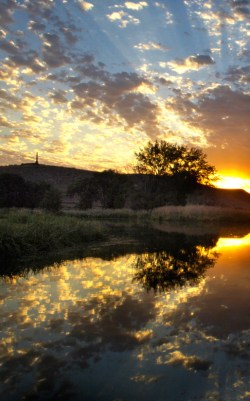
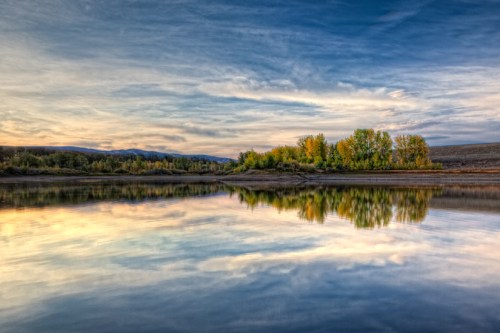
I enjoy going to Whitman Mission in the early morning or late evening. There is such a solitude  and beauty in this place. Below are a couple of images that were taken in the early morning at the Mill Pond in the park.


GHamburghDaybreak-at-the-Mill-Pond

Daybreak at the Mill Pond - Copyright Gary Hamburgh 2009 - All Rights Reserved


GHamburghDSC_2256-Reflection-at-Dawn

Reflection at Dawn - Copyright Gary Hamburgh 2009 - All Rights Reserved

Take the time to visit the beautiful area and you will be rewarded with a look at the history and beauty in eastern Washington.


Use a Polarizer to Add “Pop” to Your Fall Colors

Bennington Lake Reflection - Copyright Gary Hamburgh 2009 - All Rights Reserved

Bennington Lake Reflection - Copyright Gary Hamburgh 2009 - All Rights Reserved

At this time of year the fall colors are really starting to pop in the Palouse. The image at the top of this page was taken last week with a polarizer as I visited Bennington Lake near Walla Walla, WA.

An article by Kevin McNeal was published in the latest online edition of Outdoor Photographer and he talks about the use of filters to enhance your images of fall colors. I especially liked the discussion about the use of a polarizer.

Hopefully this article will encourage you to use filters to give your fall images that extra “pop”.

The most important filter for fall is the polarizer. Useable in all facets of nature photography, this filter can make a significant improvement to your images. The polarizer deepens the color of blue skies, provides more saturated colors, and reduces glare and reflections in bright or sunny conditions. Concerning fall foliage, the polarizer eliminates glare on leaves and flowers. It intensifies and saturates color in wet foliage and adds color density to blue or hazy skies. One additional benefit of using a polarizer is that it cuts through the haze in the atmosphere. This added clarity allows subjects to stand out more against the deeper tones of the sky so that fall foliage looks even more pronounced.
When light hits a nonmetallic surface, it’s reflected and polarized—the wavelengths are aligned—and when we see this reflection from the surface of water, for example, we call it glare. The polarizer blocks the wavelengths perpendicular to its axis. This is achieved by using a specialized foil positioned between two sheets of glass. The front part of this polarizer then can be rotated, altering the amount of polarized light that can be blocked out by the filter. A simple rotation of the front glass allows the photographer to dial in the amount of effect desired in the image.
To do this properly, position the polarizer on the lens and rotate slowly while looking through the camera’s viewfinder. Choosing where to stop the rotation is a personal choice, but you want to maximize the effect up to the point where it begins to look unrealistic. For example, when the scene includes blue skies, rotate the polarizer only until you get deep, rich blues. If overrotated, the blues can turn into an unrealistic darker tone, especially in higher elevations. To maximize the potential of a polarizer, keep the sun at a right angle to the camera by holding your hands out to the side while facing the sun. Where your arms point is where the polarizer works best. A 90-degree angle to the sun is optimal because this is the location of the most polarized light in the sky.
One challenge many photographers have is determining the best time to use a polarizer. It’s effective in many situations, but if you’re unsure when to use a polarizer, hold it up and look through it with your eye instead of screwing it onto the lens. This is a quick way to see if the polarizer is having any effect. In the fall, the polarizer is best utilized just before midday when conditions are brighter. The increased brightness adds extra contrast to the scene and cuts through the haze, especially when shooting through a telephoto lens. Photographing fall color on sunny days can add additional depth in the image when including the sky in your compositions, especially when contrasted against the vibrant colors of fall.
In addition to deepening blue skies, the most understated reason for using the polarizer is to reduce glare and reflections. This is important because once glare is present in an image, no amount of postprocessing can undo the damage. That glare reduces the color saturation in images, giving them a flat, washed-out appearance. The polarizer alters this by blocking out the polarized light, enhancing color saturation.
Reflections can be an issue without a polarizer, as well. This is evident in subjects that contain water. Nature photography in fall often includes elements such as creeks and lakes, which cause unwanted surface reflections. I like to take images of colorful foliage against the backdrop of the darker water. This would be impossible without a polarizer. It also reduces the glare off darker rocks, which allows the color of the foliage to stand out even more. Having the ability to dial in a certain amount of polarized light allows each photographer to create a sense of style that’s uniquely his or her ownThe Polarizer
The most important filter for fall is the polarizer. Useable in all facets of nature photography, this filter can make a significant improvement to your images. The polarizer deepens the color of blue skies, provides more saturated colors, and reduces glare and reflections in bright or sunny conditions. Concerning fall foliage, the polarizer eliminates glare on leaves and flowers. It intensifies and saturates color in wet foliage and adds color density to blue or hazy skies. One additional benefit of using a polarizer is that it cuts through the haze in the atmosphere. This added clarity allows subjects to stand out more against the deeper tones of the sky so that fall foliage looks even more pronounced.
When light hits a nonmetallic surface, it’s reflected and polarized—the wavelengths are aligned—and when we see this reflection from the surface of water, for example, we call it glare. The polarizer blocks the wavelengths perpendicular to its axis. This is achieved by using a specialized foil positioned between two sheets of glass. The front part of this polarizer then can be rotated, altering the amount of polarized light that can be blocked out by the filter. A simple rotation of the front glass allows the photographer to dial in the amount of effect desired in the image.
To do this properly, position the polarizer on the lens and rotate slowly while looking through the camera’s viewfinder. Choosing where to stop the rotation is a personal choice, but you want to maximize the effect up to the point where it begins to look unrealistic. For example, when the scene includes blue skies, rotate the polarizer only until you get deep, rich blues. If overrotated, the blues can turn into an unrealistic darker tone, especially in higher elevations. To maximize the potential of a polarizer, keep the sun at a right angle to the camera by holding your hands out to the side while facing the sun. Where your arms point is where the polarizer works best. A 90-degree angle to the sun is optimal because this is the location of the most polarized light in the sky.
One challenge many photographers have is determining the best time to use a polarizer. It’s effective in many situations, but if you’re unsure when to use a polarizer, hold it up and look through it with your eye instead of screwing it onto the lens. This is a quick way to see if the polarizer is having any effect. In the fall, the polarizer is best utilized just before midday when conditions are brighter. The increased brightness adds extra contrast to the scene and cuts through the haze, especially when shooting through a telephoto lens. Photographing fall color on sunny days can add additional depth in the image when including the sky in your compositions, especially when contrasted against the vibrant colors of fall.
In addition to deepening blue skies, the most understated reason for using the polarizer is to reduce glare and reflections. This is important because once glare is present in an image, no amount of postprocessing can undo the damage. That glare reduces the color saturation in images, giving them a flat, washed-out appearance. The polarizer alters this by blocking out the polarized light, enhancing color saturation.
Reflections can be an issue without a polarizer, as well. This is evident in subjects that contain water. Nature photography in fall often includes elements such as creeks and lakes, which cause unwanted surface reflections. I like to take images of colorful foliage against the backdrop of the darker water. This would be impossible without a polarizer. It also reduces the glare off darker rocks, which allows the color of the foliage to stand out even more. Having the ability to dial in a certain amount of polarized light allows each photographer to create a sense of style that’s uniquely his or her own.

Ideas for Improving Your Photography


Barn Lit by Morning Light - Copyright Gary Hamburgh 2009 - All Rights Reserved

Barn Lit by Morning Light - Copyright Gary Hamburgh 2009 - All Rights Reserved

I would like to share with you an article “10 Ways to Improve Your Photography without Buying Gear” that was published by my mentor Scott Bourne on Photo Focus. It has some outstanding principles to help you improve your photography. Over the years that I have worked with Scott he has shared these ideas with me in various ways. 

That is one reason I created this blog and am emphasizing the Palouse. It is a beautiful area that is dear to my heart and it is easy for me to get passionate about the people and the images that are available there. Enjoy the reading and taking these ideas to heart will greatly enhance your images.